













Why should I learn how to save and invest?
- Spending money now, both for necessities and indulgences, is very normal and human – in many ways, we want to live “in the here and now”
- At the same time, learning how to limit spending on indulgences in order to save and invest are key to securing one’s future – think about your future self, and “pay yourself first”
- What is the difference between saving and investing? Savings are accessible more quickly, tend not put the original amount saved at risk, and provide you with a more modest return whereas with investing, the amount you invest tends to be at risk and less liquid, but you also have the potential to earn higher returns
- Why save and invest: Most people don’t earn enough to make large purchases (e.g. a new bike, car or house) with their current paycheck. As a result, saving and investing toward a goal requires putting aside money periodically and eventually accumulating enough to make the purchase. Besides large purchases, its important to build an emergency savings fund for unexpected events (e.g. losing one’s job, getting sick, large repairs)
What are the Principles of Saving?
- Saving involves putting aside a portion of your current income for future spending, and earning interest on those savings to increase the value of your savings until you begin to spend them
- There are of different types of savings accounts including: traditional savings accounts, money market accounts and certificates of deposits (CDs)
- What distinguishes savings from investing is: 1) the amount you invest, called principal, tends not to be at risk of loss, 2) the amount you earn, i.e. interest, tends to be relatively low and 3) your money is accessible more quickly
- As a result, savings are most appropriate for short-term goals (e.g. 3 years or less) or money you need to be able to access quickly (e.g. emergency savings)
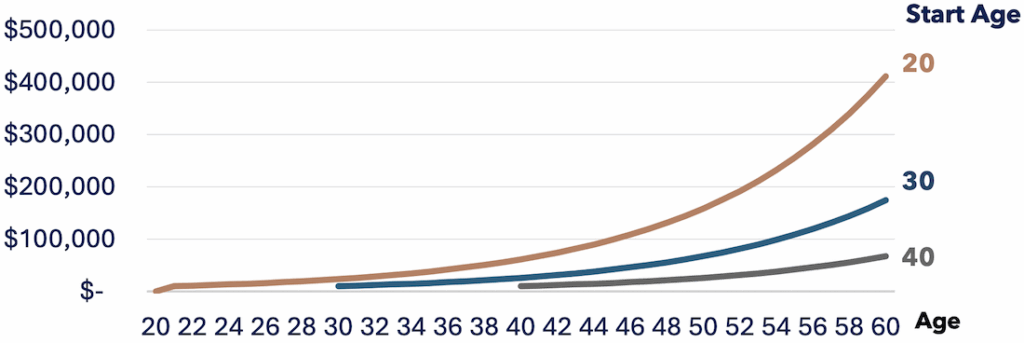
The Power of Starting Early
- Starting early puts time on your side
What are the Principles of Investing?
- Like saving, investing involves putting aside a portion of your income for future spending but, instead of using savings accounts, “investors” buy a wide variety of “investments” including: stocks, bonds, mutual funds, exchange traded funds (ETFs) and real estate to name a few
- As an investor there are a number of ways to increase the value of the money you invest including: 1) price appreciation, 2) dividends, and 3) interest
- What distinguishes investing from savings is: 1) all or a portion of your principal is at risk of loss, 2) the amount you can potentially earn is, in theory, unlimited, 3) the value of your investments can rise and fall while you own them, and 4) your investments can be more or less liquid
- As a result, investing is more appropriate for long-term goals or money you do not need to access quickly
What role can proper budgeting play?
- Budgeting is a spending plan based on your expected income and expenses; without a plan you may run the risk of overspending
- When you are aware of how your income and expenses balance, and when you spend less than you make, you can enjoy life with more confidence and satisfaction
- As your income goes up, budgeting can help you to avoid “lifestyle creep” so that you continue to live within your means, and are able to save and invest
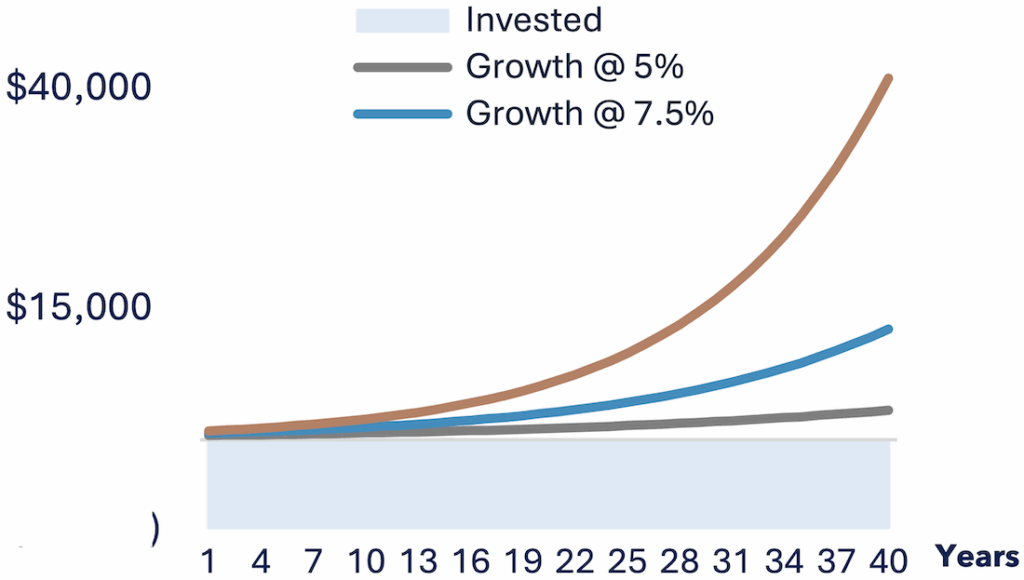
The Power of Compounding
Compounding is the process of leaving your account earnings (savings interest or investment returns) in your account to earn additional interest or returns on those amounts
Action Steps: Getting started
To get started with Saving, consider:
- Starting small is better than not starting at all
- Have fun visualizing your spending goals and then setting a Savings Goal (dollar amount and time to reach)
- Talk to a financial professional about clarifying and prioritizing your Investing Goals and better understanding the tradeoff between risk and return, and how to manage risk
- Decide which account types to best utilize and how much to invest
Supporting Information
- SEC’s Guide to Saving and Investing
- Investor.gov – A Roadmap to Your Financial Security
- Investopedia
01/13/2025 Last Reviewed
Archford Capital Strategies, LLC (“Archford”) is a Registered Investment Advisor, registered with the U.S. Securities and ExchangeCommission (“SEC”). Registration as an investment advisor does not imply a certain level of skill or training. The information presented has been prepared on the basis of publicly available information, internally developed data or other third-party sources. There is no guarantee as to the accuracy, completeness, or reasonableness of the contents contained herein. Archford Capital Strategies, LLC and its affiliates do not provide legal advice. Tax and accounting services are offered through Archford Accounting, LLC, an affiliated entity of Archford Capital Strategies.