










Election season has a way of capturing our attention.
The headlines are constant, opinions are everywhere, and every election seems to bring a new round of questions about what comes next. But once the votes are counted and the results are announced, many Americans are left wondering something far more personal:
What does this mean for my money?
From retirement savings and investment portfolios to taxes and the broader economy, changes in Washington can influence our financial lives. But understanding what those changes actually mean requires looking beyond the headlines.
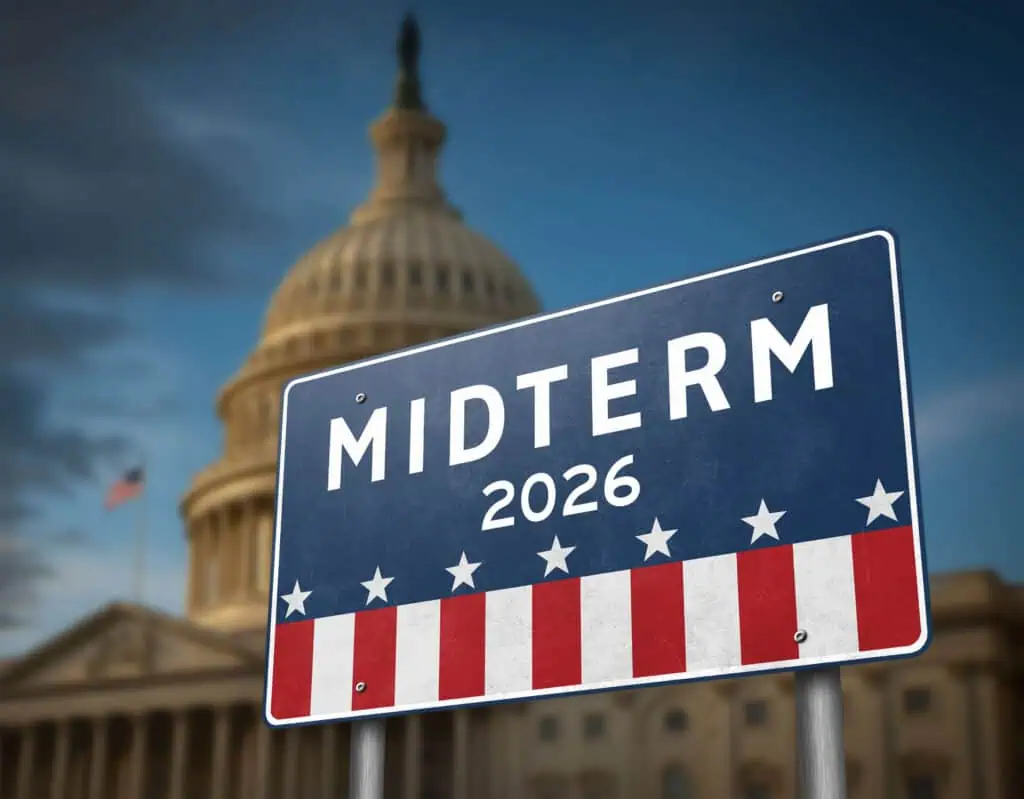
Results of the 2026 Midterm Elections
On November 3, Americans headed to the polls to determine the political direction of Congress for the next two years. The results marked a significant shift in Washington, with Democrats winning control of both the House of Representatives and the Senate, ending Republican control of Congress. With President Donald Trump remaining in the White House, the country will enter a period of divided government when the newly elected Congress takes office in January 2027.
This new balance of power could influence the direction of federal legislation, government spending, tax policy, and regulatory priorities. However, an important distinction is that election results do not automatically translate into immediate policy changes. Legislation still needs to pass through Congress, and many proposals will require negotiation, compromise, and presidential approval.
For investors and families, this distinction matters. Political headlines can move quickly, while meaningful changes to tax laws, retirement regulations, and economic policy may take months or even years to develop.
How Could the Election Impact You?
While the political implications will continue to unfold, several areas are worth watching from a financial planning perspective.
- Taxes and financial planning. Changes in congressional leadership can affect the likelihood of future tax legislation, including proposals involving individual income taxes, business taxation, retirement accounts, and estate planning.
- The economy and interest rates. Decisions surrounding government spending, fiscal policy, and regulation can influence economic conditions. However, interest rates and inflation are also affected by Federal Reserve decisions and broader economic forces beyond Washington.
- Investment markets. Investors may react to expectations surrounding taxes, trade, energy, healthcare, and other policy-sensitive industries. These reactions can create short-term market fluctuations, even before any legislation is enacted.
A post-election analysis from PwC highlights how the changing balance of power could affect future tax legislation, federal spending, and negotiations between the political parties1. While significant changes to existing tax provisions may face legislative obstacles, future proposals and bipartisan agreements could still create important financial planning considerations.
For individuals and families, the most important consideration may not be what changes immediately, but which developments could eventually create new financial planning opportunities or challenges.
What History Tells Us About Elections and the Market
The stock market has navigated elections, political transitions, and periods of divided government many times before.
According to research from Dimensional Fund Advisors, S&P 500 returns during midterm election months have historically been similar to returns during other months, based on data dating back to 1926. The research also found no consistent pattern of stronger market performance under one political party or another, including periods when control of Congress was divided2.
Correctly predicting an election outcome doesn’t necessarily mean correctly predicting how the market will respond. Financial markets continuously incorporate expectations about economic conditions, company performance, and future policy decisions. By the time election results become official, investors may have already accounted for many of the anticipated changes.
In other words, predicting political outcomes isn’t the same as predicting where financial markets will go. Attempting to time investment decisions around election results can introduce risks of its own. An investment strategy should be guided by your financial goals, not simply by which political party holds office.
From the Desk of CIO Paul Alegnani, CFA®, CAIA®
“We believe successful integration of planning and investing is less about predicting or reacting to short-term events, whether elections, market fluctuations, or economic developments, and more about preparing for a range of possible outcomes. One of the greatest risks investors face is allowing short-term events and emotions to drive long-term financial decisions. At Archford, we focus on building resilient financial strategies anchored to our clients’ objectives, emphasizing disciplined decision-making, thoughtful diversification, and the flexibility to adapt as risks and opportunities evolve.”

As CIO of Archford, Paul Alegnani is charged with putting his knowledge to work for clients and finding creative investment opportunities while also managing risk. Paul graduated from the University of Illinois with a Bachelor of Science degree in finance. He also earned his Master of Science in finance from St. Louis University. He also holds the Chartered Financial Analyst (CFA®).
Paul joined Archford after 9 years as a Senior Portfolio Manager at US Trust (Bank of America) constructing and managing client portfolios totaling over $900 million. During this time he also played a significant role in developing customized strategies and managing concentrated stock risk for his clients. Prior to US Trust, Paul spent 9 years at US Bank’s private wealth management group in similar capacity. Before his experience began as a high net worth portfolio manager, Paul had several diverse roles over 5 years including equity analysis at Edward Jones and investment analysis at Hedge Fund Research in Chicago.
Your Financial Plan Should Be Built for More Than One Election
It’s natural to feel uncertain when political leadership changes or markets become volatile. But a well-designed financial strategy shouldn’t depend on one political party, one economic forecast, or one election outcome.
That means maintaining an investment allocation appropriate for your goals, understanding your tolerance for risk, and preparing for different market environments. It also means recognizing that financial decisions are often interconnected. Changes in tax policy, interest rates, or economic conditions may influence retirement strategies, investment decisions, charitable giving, or estate planning considerations.
The objective isn’t to eliminate uncertainty. It’s to build a financial strategy that helps you navigate it.
A long-term plan can provide perspective during challenging markets and help reduce the temptation to make emotional decisions based on short-term events. Sometimes, the most appropriate response is to stay the course. Other times, changing circumstances may present opportunities for thoughtful adjustments.
The key is understanding the difference.
Looking Beyond the Headlines
The results of the 2026 midterm elections will influence conversations in Washington for years to come. Some policies may change, others may remain the same, and new financial planning considerations may emerge along the way.
But through it all, your financial goals remain the foundation of your plan.
Whether you’re preparing for retirement, growing a business, preserving family wealth, or planning for the next generation, those priorities deserve attention regardless of who’s in office.
At Archford, we believe financial confidence comes from understanding how the different pieces of your financial life work together. Through a coordinated approach to wealth management, we help families evaluate changing circumstances while keeping their long-term priorities in focus.
Because while we can’t control elections or financial markets, we can focus on how we prepare for them.
And that preparation can help you move forward with greater confidence and peace of mind.
Sources:
1PwC. “Midterm Elections Shift Control of Next Congress and Outlook for Tax Legislation.” PwC, 4 November 2026, https://www.pwc.com/us/en/services/tax/library/midterm-elections-shift-control-of-next-congress-outlook-for-tax-legislation.html.
2Dimensional Fund Advisors. “Midterm Elections—What Do They Mean for Markets?” Dimensional, 21 October 2026, https://www.dimensional.com/us-en/insights/midterm-elections-what-do-they-mean-for-markets.
Important Disclosure: Investing involves risk, including possible loss of principal. Diversification and asset allocation do not guarantee a profit or protect against losses in declining markets. Historical market performance is not indicative of future results. This article is intended for general informational purposes and should not be considered individualized investment, tax, or legal advice.